

Three words will define West Bengal for the foreseeable future. Not a vision. Not a promise. Three words from the man who will now govern over 100 million Bengalis: Detect. Delete. Deport. Suvendu Adhikari coined them before the votes were cast, used them as a campaign manifesto, and now, having delivered the BJP its first West Bengal government, he carries them with him into office. Words have a way of becoming policy when the man who said them holds the pen.
I watched the results from Dhaka. 207 seats for the BJP, 80 for the Trinamool Congress. It was “historic.” The word got used often enough on the television panels. What nobody said plainly was this: for Bengali Muslims on both sides of the Padma, this is a verdict.
The Election Commission’s Special Intensive Revision process deleted or placed under adjudication approximately 9.1 million names ahead of the election. The pattern of those deletions was not random. Around 65 percent of the voters whose names were challenged were Muslim. In Murshidabad, a district where two-thirds of the population is Muslim, entire constituencies were gutted. In Nandigram, over 95 percent of challenged names belonged to Muslim voters who make up only a quarter of the constituency. You can call this a coincidence. You can also call a sieve a coincidence. It depends how closely you are watching.
Adhikari made no effort to hide the arithmetic. In July 2025, he announced: “If around 50 lakh names were excluded in Bihar, Bengal could have as many as 1.25 crore such names. All Bangladeshis and Rohingyas in West Bengal will be pushed back after the SIR.” At a Sodepur rally, he instructed party workers: “Your duty is to ensure that the names of Bangladeshi Muslims, Rohingyas and voters with double or triple entries do not appear in the fresh electoral rolls.” And when TMC supporters raised slogans in response near a Kolkata polling booth during the election itself, he pointed at them and said: “They are all Bangladeshi Muslims. They are scared. Mamata will be wiped out.”
When Muslim migrant workers from Nandigram, men with Aadhaar cards and voter IDs, men who had traveled to Gujarat and Maharashtra to earn a living, gathered near a rally, Adhikari addressed them directly: “Don’t make a mistake. Mend your ways so that there are no problems after May 4. You can give threatening looks and say ‘Joy Bangla’, but I am writing down everything.” Sit with that sentence for a moment. I am writing down everything. That is not campaign rhetoric. That is a man announcing in advance how he intends to use state power. That man now governs West Bengal. The list will now be law.
This is not a defense of Mamata Banerjee or the Trinamool Congress. Her fifteen years in power produced their own thick catalogue of booth capturing, political violence, and patronage architecture that would impress even the most cynical observer of South Asian politics. The Bengali Muslim voter who turned away from the TMC had reasons. Grievance is real. Corruption is real. The problem is not that the BJP won. The problem is the specific machinery by which it won, and the specific ideology it intends to govern with. These are separate conversations. Collapsing them, treating the BJP’s victory as a deserved correction, is the intellectual equivalent of diagnosing a fever and prescribing arsenic.
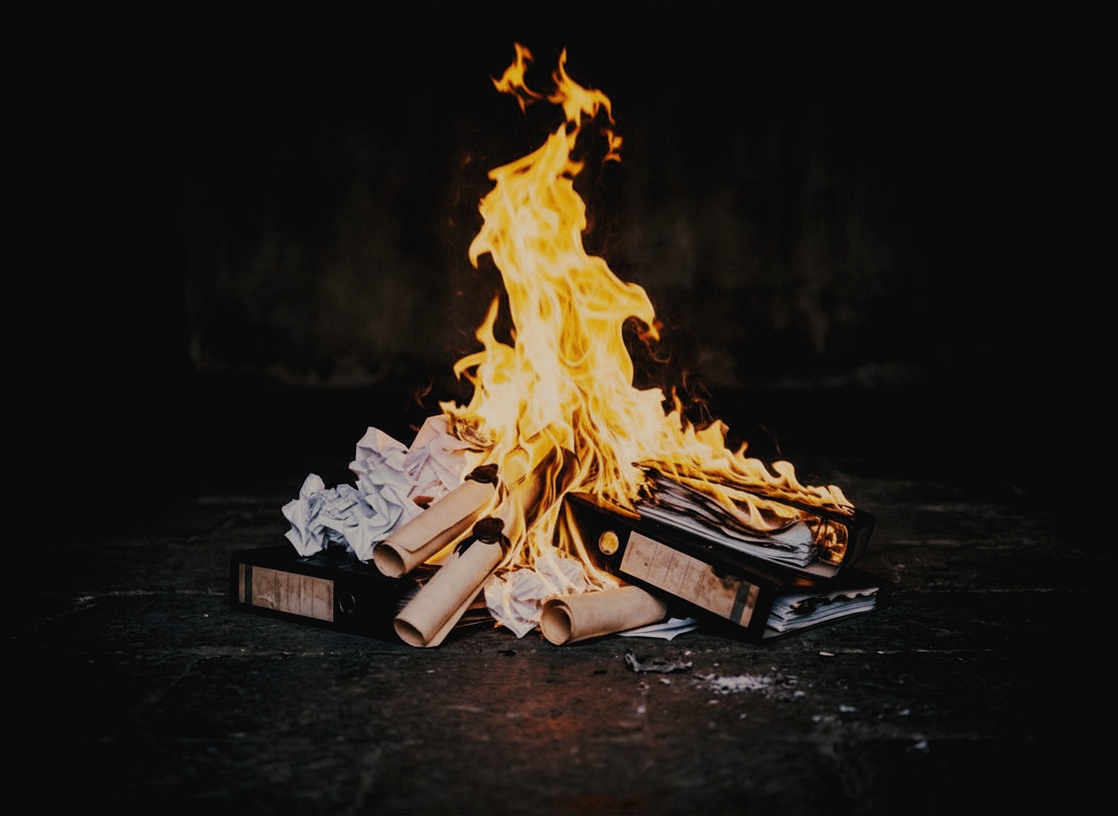
Violence erupted within hours of the result. TMC offices burned in Tollygunge, Baruipur, Baranagar, and Howrah. A worker was killed in Birbhum. The BJP called these “sporadic incidents.” They would. The violence of a party that has just consolidated power on the oxygen of communal fear is never described by that party as the logical outcome of its own campaign. It is always sporadic. Until it isn’t. Hindus for Human Rights, not a body one would describe as partial to any opposition, called the SIR process “nothing less than the destruction of Indian democracy.” When the most restrained voices in the room are using the word destruction, the room is already burning.
Now I want to say something that will make certain editors in Delhi uncomfortable, and I find I am no longer able to avoid it.
For the better part of two years, India’s political establishment, its BJP governments, its primetime anchors, its think tanks, have described post-Hasina Bangladesh as an extremist state. Sheikh Hasina, from her residence in Delhi, has contributed generously to this narrative, warning in op-ed after op-ed of “radical Islamist ideology” spreading through Bangladesh, of “extremists filling the political vacuum.” Indian media obliged with extraordinary enthusiasm. It framed Yunus as an enabler of Islamism. It framed Bangladesh’s students as jihadi proxies. And here is the part that still astonishes me: a man wearing a panjabi kurta (the long tunic worn by Muslim men across South Asia) became, in the visual language of Indian television, shorthand for radicalism. The skullcap, the beard, the kurta: a uniform of suspicion, broadcast nightly into hundreds of millions of homes. The semiotic war on Muslim appearance was not incidental to the BJP’s political project. It was the project.
So Bangladesh was extremist. Bengali Muslims were extremist. A kurta was extremist. And now, if you have been paying even moderate attention, one is entitled to ask: does India have an extremism problem?
A government that systematically removes the names of nine million minority voters from electoral rolls before an election. A senior leader who instructs party workers to purge Muslim names from voter lists and tells Muslim workers he is writing down their names. A campaign that treats Muslim identity as inherently foreign, inherently criminal, inherently incompatible with citizenship. A wave of violence after the election directed at political opponents. A governing slogan (Detect. Delete. Deport.) that the incoming chief minister deployed as policy, not metaphor.
If this were happening in Dhaka, we know exactly what the Times of India headline would read. We have seen those headlines. We have been those headlines.
What it means for us, and this is the part I am obligated to say plainly, is that the question of Bangladesh’s proximity to West Bengal is no longer theoretical. Adhikari’s government inherits a border. It inherits a stated policy of deportation. In 2025, before he even held this office, hundreds of Bengali-speaking Muslims, many holding Indian citizenship and pending court cases, were pushed to the Bangladesh border and expelled without documentation, without process, without appeal. The CPI(M) documented the cases. Human rights organizations documented the cases. Bangladesh’s Foreign Minister has already issued a formal warning about intensified “push-ins.” A man who said I am writing down everything is now in a position to act on that list, with a 2,000-kilometer border, a policy of three words, and 207 seats behind him.
The BJP’s political machinery requires Bangladesh to be a permanent source of Islamic threat. We are not a neighbor in this architecture. We are a prop. The New York Times called this win the completion of “its decades-long campaign to remake the world’s largest democracy.” Remake is the operative word. We Bangladeshis know what that means.
For now, the man with the list is in office. He told us, clearly and on the record, that he has been writing everything down. We should believe him.