




“The demand for justice remains infinite, which is precisely why it must be made.”
Jacques Derrida, Force of Law
Preface: The Facts on the Ground
The events that animate this essay occurred in a concentrated arc between late March and late April 2026. A brief account of them may usefully precede the analytical register they demand.
Between March 28 and April 17, at least four people were arrested for social media posts critical of the current government: Azizul Haque, detained on March 28 in Mymensingh; Shaon Mahmud, on April 3 in Munshiganj; Bibi Sauda, on April 6 in Bhola; and content creator A.M. Hasan Nasim, detained by plainclothes officers in Dhaka on or around April 17. Officers confiscated his wife’s phone alongside his own electronic devices. Human Rights Watch documented these cases as part of a systematic pattern of misuse of the 2025 Cyber Security Ordinance, legislation that, rights groups argue, reproduces the repressive architecture of its predecessor. Authorities filed Nasim’s case in connection with a cartoon he had shared, drawn from a public parliamentary statement. He was granted bail on April 21. His account, reported across Bangladeshi media, supplies a register that will recur throughout this essay.
In the same period, at least ten journalists accredited to Dhaka University were allegedly beaten at or near Shahbagh police station by cadres of Jatiyatabadi Chhatra Dal (JCD), the student wing of the ruling Bangladesh Nationalist Party (BNP). A further six journalists were separately reported as harassed or threatened. Manjur Hossain Mahi, president of the Dhaka University Journalists Association, and the association’s general secretary, Liton Islam of Agami’r Shomoy, were among those affected, alongside correspondents from the Daily Star, Bangladesh Pratidin, Dhaka Tribune, Manabzamin, and several other national outlets. These are not the quantities of anecdote. They are the coordinates of a pattern.
Two contested institutional disputes form the deeper political grammar of this period. The first is the legal status of the February 2026 ganabhot (popular referendum), in which roughly sixty to sixty-one percent of participating voters endorsed a proposed national charter, and whose binding force remains, as of this writing, before the courts. The second is the parliamentary committee’s handling of the 133 ordinances issued by the Yunus interim administration. Of those, 97 were ratified unchanged, 13 amended, 7 repealed, and 16 placed under further scrutiny. The implications of that process for accountability and constitutional reform are, as the analysis below will show, considerably more consequential than the arithmetic suggests. It is against this evidentiary floor that the following argument is made.
I. Assault and Impunity
What is most revelatory about the assault on Shahbagh is not the violence itself. Bangladesh has, across administrations, shown no shortage of that. The revelatory element is its atmosphere: the assault unfolded at or around a police station, with officers present, in a context in which the Home Minister had days earlier announced the government’s intention to put an end to what he termed “mob culture.” One of the attackers, barely a month into his first semester at the university, reportedly wondered publicly afterward whether the beatings had been sufficient. This quality of impunity, the way it performs itself for an audience without apparent anxiety about consequence, is worth pausing over. It is the impunity not of those who believe themselves invisible, but of those who have reason to believe that visibility is no longer the relevant variable.
Giorgio Agamben’s concept of the “camp” applies here as something more than metaphor. He uses the term not for the literal camp of barbed wire and watchtowers, but for the structural condition in which law is made inoperative through its own application, in which legal protection is suspended without being formally withdrawn. The threshold between inside and outside the law is what Agamben identifies as the operative site of the state of exception. It appears to be at that threshold, neither inside nor outside ordinary legal protection, that journalists, elected student representatives, and opposition activists increasingly find themselves in post-uprising Bangladesh. A man is beaten inside a police station. A weapon appears in a photograph that goes viral. The administration announces it cannot identify the individual in question. The hard disk, as the saying goes, has been formatted.
Mohd. Julahas Islam, reportedly the cultural secretary of the Haji Muhammad Muhsin Hall parliament, is said to have suffered a ruptured eardrum during one of these attacks. The detail, if confirmed, adds a particular texture to the image of attackers who afterward mocked the news coverage of their own violence, picking over whether their photographs had been reproduced flatteringly. The attacker who is indifferent to whether his victim can hear properly: this is one register in which the present moment speaks.
II. What the Mob Was: Constituent Power and the Event of 36 July
To understand what is now being suppressed, one must first recover what was, in the summer of 2024, expressed. One must recover the “mob,” whose semantic career since those months has been a study in how political language is colonized and reversed. During the weeks that Bangladeshi political mythology would come to call “36 July,” a phrase that compresses the bloody July days and the decisive rupture of August 5, the street exercised something that the conventional vocabulary of political science is poorly equipped to name. Students, garment workers, the urban precariat, and a middle class exhausted by fifteen years of administered consensus converged into a force whose refusal extended past one government to the entire political architecture through which authoritarian power had been normalized: a constitutional order repeatedly mutilated by executive decree, a security apparatus operating beyond judicial oversight, a bipartisan alternation between two dynastic formations that had long since evacuated electoral competition of substantive content.
Claude Lefort’s notion of “the people in the making” describes more faithfully what occurred than any of the managerial vocabularies since retrospectively applied to it. By that phrase Lefort meant the demos constituted through its own performative enactment, rather than preexisting as a fixed sociological entity whose will awaits expression. The crowd of 36 July was not irrational, and not anarchic in the pejorative sense. It was something closer to what Hannah Arendt called the power of people acting in concert: the specific political capacity that emerges when individuals gather without institutional mediation and act in the full presence of one another. Alain Badiou’s concept of the Event captures the dimension of irreducibility. What occurred in those weeks could not be accounted for within the categories the situation made available. It exceeded the situation, and thereby forced new orientations upon those who had encountered it.
What did that Event demand?
The answer was stated, in the idioms of the street, with considerable clarity. The old 1972 constitution, repeatedly sutured through decades of executive amendment, could no longer contain the popular sovereignty being exercised in the open air. The demand for a “July Sanad” (July Charter), a written mandate ratifying the rupture in the form of a new constitutional settlement, was structurally central to the uprising’s self-understanding. The ganabhot of February 2026, in which roughly sixty to sixty-one percent of participating voters endorsed the proposed National Charter, functioned as the available juridical vehicle for formalizing that demand. It was an attempt, through the mechanisms of the interregnum, to ratify the people’s constituent act. Whether that referendum carries legally binding force is, at the time of writing, before the courts and remains a matter of genuine dispute. As a political expression, however, its force seems harder to contest. The people had attempted to decide, rather than accept the decision of others. The mob, during its brief interval of sovereignty, was never chaos. It was, in the precise sense, the political subject.
III. The Genealogy of “Gupto”: How a Slur Is Born and What It Does
Every political order generates its necessary enemy. What is interesting about the post-July dispensation in Bangladesh is the rapidity with which it has generated a new one. To put the matter more precisely: the rapidity with which an old technology of political exclusion has been refitted with a new signifier for new operational purposes.
The Awami League’s master term of exclusion was “Rajakar”: the collaborator, the 1971 war criminal, the figure whose invocation cut short political argument by placing the accused outside the legitimate bounds of the national community. Its economy was remarkable. To call someone a Rajakar was to perform an exclusion rather than make a claim susceptible to evidence and refutation. It drew a boundary between the nation and its constitutive outside. That anyone organizing under Islamic identity, questioning Indian influence, or supporting BNP and Jamaat could be so labeled was no logical fallacy. It was a political technology, efficient, flexible, and durable across the decades during which the Awami League required an internal enemy whose elimination would justify exceptional measures. The term broke against the bodies of the uprising’s students, when the Hasina government committed the catastrophic semantic overreach of applying it to the children of 1971 veterans. A signifier that absorbs too much loses its operational force. “Rajakar” was spent in the streets of July.
What would replace it?
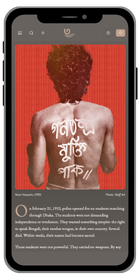
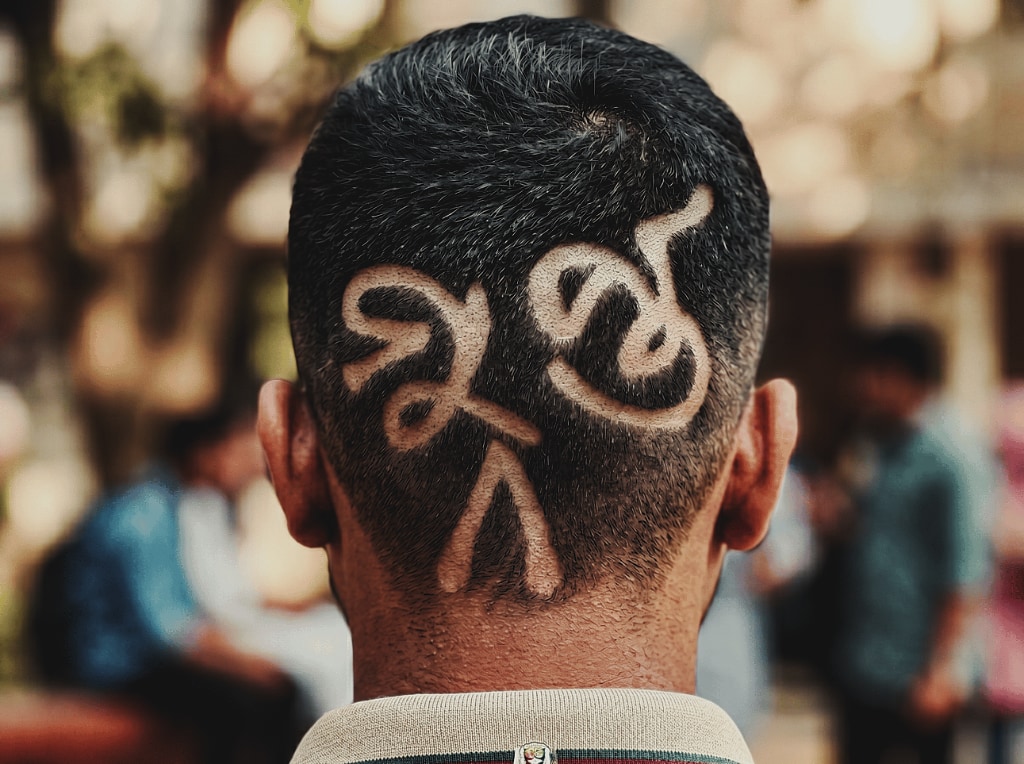
The answer emerged through the usual channels of political semiotics: graffiti campaigns, social media lexicons, the incantatory repetition of party spokespersons. By the middle of 2025, with accelerating intensity through early 2026, the new term coalesced around the word Gupto (গুপ্ত), meaning hidden, covert, occult. TBS News and other outlets confirm that the term hardened into a political accusation in the aftermath of the July Uprising, and that JCD activists altered graffiti on university walls from “Student” to “Gupto.” The substitution carries precise implications. The accusation, deployed primarily by Chhatra Dal against Islami Chhatra Shibir and others who organize under the signs of Islamic identity, holds that such activists lurk behind the cover of “general students,” that they orchestrate violence from concealment, and that they spread what is characterized as sentiment against the uprising while performing loyalty to the July Event. These are accusations whose evidentiary bar is, by design, impossible to meet. Hiddenness, by definition, is not visible. Their political utility is therefore proportional to their epistemic unanswerability.
The structural similarity to “Rajakar” is legible in this feature. Both terms share the same grammatical function, performing exclusion rather than describing a condition susceptible to disproof. The Gupto is placed, in Agamben’s framework, in a zone of indistinction: included in the political community through the mechanism of his exclusion from it, subject to the law in the most arbitrary way without being formally expelled from its protection. He is arrested under cybersecurity ordinances for a shared cartoon. He is beaten at a police station while officers observe with practiced neutrality. He is rendered publicly precarious through the accumulation of stigmatization. This is what Agamben means by homo sacer: a figure whose legal inclusion is maintained precisely in order to expose him to arbitrary treatment that the law nominally prohibits.
The crucial difference between “Rajakar” and Gupto lies in the temporal axis of accusation, and is worth dwelling on. “Rajakar” drew its force from the foundational trauma of 1971, from historical verdict and the authority of collective memory. It was retrospective, anchored to an event whose interpretation was controlled by the state. Gupto, by contrast, functions in the present tense and prospectively. It accuses not of what one’s father did but of what one is doing now, in concealment, to betray the new order. This makes it the more efficient technology of the two: it can be applied at any moment, to anyone who mobilizes Islamic symbols or dissents from the new orthodoxy, without recourse to historical evidence that might be disputed. The threshold of exclusion is permanently open. The enemy is perpetually immanent.
IV. The False Flag and the Structural Logic of Campus Instability
The immediate trigger for the Shahbagh incidents appears to have been a fabricated screenshot. It was attributed to a Shibir leader, contained language about Tarique Rahman and Zaima Rahman, and was confirmed as fabricated by verification outlets including Rumor Scanner. What followed suggests the operation of a recognizable sequence: a manufactured provocation, the response it predictably generates, the legal complaints that follow naming opposition figures, and the infrastructure thereby created for clearing the campus of inconvenient organizations, since their continued presence has been made legally costly and physically dangerous. The attribution of the fabricated screenshot is not confirmed in available reporting, and this essay does not assert it. The pattern, however, is sufficiently legible that one can describe its grammar without certainty about every agent.
Beneath the tactical layer, there is a deeper structural logic worth naming. A university campus kept permanently at the edge of violence cannot function as an educational institution. A campus that cannot function as an educational institution produces graduates who are not equipped for intellectual independence. Graduates lacking intellectual independence do not rise through merit. They rise through factional loyalty. Those who rise through factional loyalty become, in the end, the reliable personnel of the system that kept their predecessors educationally deprived: working either as institutional apparatchiks or as the organizational muscle through which power reproduces itself across generations. The lasting consequence of campus instability is no incidental cost of elite reproduction. It appears, from the historical evidence of successive administrations, to be one of its mechanisms. The university is kept political so that it cannot become educational. It is kept educational in name so that the credential retains its exchange value. It is kept dependent so that its graduates remain dependent. Each link in that chain closes the one before it.
The image of a Chhatra Dal leader walking with a weapon in open daylight, a photograph that circulated widely even as the administration announced its inability to identify the individual, acquires, in this context, a meaning beyond the scandalous. The state’s announced incapacity to see what is visible to everyone else is itself a statement: a demonstration, as legible as any policy document, of whose safety the state’s sight is organized to protect, and whose is exposed by its organized blindness.
V. The Betrayal of the Ganabhot: Ordinances in Dispute, Exceptions Restored
The four faces associated with confirmed arrests, Azizul Haque, Shaon Mahmud, Bibi Sauda, and A.M. Hasan Nasim, constitute, taken together, a political argument made in the grammar of detention rather than in language. Nasim’s case is particularly instructive. Plainclothes officers detained him on or around April 17, 2026, presenting themselves at his home. The case against him was filed under the 2025 Cyber Security Ordinance, related to online blackmail provisions, and arose from his sharing of a cartoon based on a public parliamentary statement by a ruling party legislator: a satirical re-presentation of something the state had not attempted to conceal. Officers confiscated his wife’s mobile phone alongside his own electronic devices. He was granted bail on April 21. The charge, the method, and the timeline together suggest the operation of what Human Rights Watch has described as a systematic misuse of cybersecurity legislation, a pattern that, rights groups argue, is structurally continuous with the repressive practices the uprising was nominally fought to end.
This continuity is the index of what Badiou calls the management of the Event rather than fidelity to it. The July Uprising demanded accountability, independent institutions, an end to arbitrary detention for speech. The BNP government has offered, in the place of those demands, the perpetuation of those institutional mechanisms under new operators: a Thermidorian restoration that speaks the language of July while reproducing the architecture July was meant to dismantle.
The constitutional dimension of this pattern is made legible by the ordinance dispute. Of the 133 ordinances issued during the Yunus interregnum, 97 were ratified unchanged, 13 amended, 7 repealed, and 16 placed under further scrutiny. The division sounds administratively unremarkable until one examines which ordinances were repealed or deferred. Among those apparently not to be enacted: provisions touching on the prevention of enforced disappearances, the independent National Human Rights Commission, and most significantly for the argument of this essay, the referendum ordinance itself. The government’s reported position, as cited in New Age, is that it lacks constitutional authority to enact the referendum ordinance. Ministers quoted in the Daily Star have suggested that the referendum is “valid by occurrence” and that its status is pending before the courts. This is a genuine legal dispute, and the essay does not adjudicate it. But the political effect of leaving the ganabhot’s binding force unresolved is functionally equivalent, in terms of what it defers, to the non-ratification of the constituent demand, regardless of what the courts may eventually determine. The people’s attempt to ratify their own act has been neither honored nor cleanly refused. It has been administered into uncertainty, which is the subtler form of the same refusal.
In Carl Schmitt’s framework, the sovereign is whoever decides the exception. The BNP executive’s management of the ordinance process, choosing what survives, what is deferred, what is lapsed, functions in this light as a reassertion of sovereign prerogative over the constituent moment: the reclosure of the opening through which, for a brief interval, the people had seized the power to found. Whether or not this reading is accepted in its Schmittian register, the political consequence is observable. The promises of the interregnum are being systematically converted into the compromises of the restoration.
VI. The Architecture of the Present: Exception, Impunity, and the Faithful Subject
What confronts us, then, is no simple regression to a prior political form. It is something structurally more precise: the reinstatement of the state of exception as norm, with new targets and new legitimating vocabularies. The powers that once designated Rajakars, that once suspended habeas corpus for Islamist organizers under the Awami League, appear to be exercised now against those who share cartoons, those who mobilize Islamic identity on campuses where a rival organization controls administrative access, those journalists who attempt to document what is occurring in front of them. Those powers operate through cybersecurity ordinances, through the tactical failure to identify activists who carry weapons, through the normalization of party violence outside police stations. The camera is confiscated. The CCTV footage is unavailable. The administration cannot identify the individual in the photograph.
Derrida’s aporia of justice insists that law can never fully coincide with justice, that every legal order is founded on a violence it cannot acknowledge, and that this non-coincidence is precisely what keeps the demand for justice alive and its satisfaction perpetually deferred. The questions the July Uprising posed to the Bangladeshi state remain open. Can the security apparatus be subjected to genuine accountability? Can the bipartisan culture of enforced disappearance be dismantled rather than redirected? Can dissent that mobilizes Islamic idioms be protected with the same institutional vigor as dissent that mobilizes secular nationalist ones? These questions have not been formally refused. They have been deferred, managed, and dissolved in procedure. Which is, as Derrida might note, the characteristically legal form of refusal.
Badiou’s notion of the faithful subject provides the complementary framework. A faithful subject is one who continues to inhabit the consequences of the Event, who refuses the managerial re-inscription of the rupture within the existing order of things, who insists, against every pressure toward normalization, that the break was real and its demands remain outstanding. The families of those who disappeared under previous administrations, many of whose cases appear to remain uninvestigated, are faithful subjects in this technical sense. The journalists who reported on the Shahbagh attacks despite the risk of being among the next to be beaten are faithful subjects. The student activists who refuse co-optation into the factional apparatus that has replaced the previous factional apparatus are faithful subjects. Azizul Haque, Shaon Mahmud, Bibi Sauda, and A.M. Hasan Nasim, detained for speech, which is to say for the minimal exercise of the freedom the uprising was nominally fought to secure, may be described as faithful subjects made precarious: homo sacer in the Agambenian sense, included in the political community specifically through the mechanism of their exposure to arbitrary power.
VII. Naming the Restoration
A restoration is no return. The political forces that succeed a revolutionary rupture do not replay the old film. They use the Event’s vocabulary against itself, rebranding its exclusions as its fulfillments. “Mob culture” is condemned from the same platform on which organized violence is deployed against journalists and student representatives. Gupto organizations are hunted by organizations whose own internal discipline, where enforced at all, appears to extend primarily to ensuring factional loyalty rather than the non-violence demanded of others. The demand to “stabilize” the campus is prosecuted, it would seem, through precisely the forms of instability that have historically served to keep universities political rather than educational, and therefore incapable of producing the kind of independent graduates who might, in time, prove inconvenient.
What is happening is, in the plainest analytical description, the slow re-enclosure of the opening that the July Uprising briefly created. The constituent moment is being administered back into constituted power. The “mob” that was, for an interval, sovereign is being reclassified as a threat to sovereignty. The Gupto who mobilizes Islamic identity is being produced, through the accumulative force of beatings, arrests, terminological stigmatization, and the non-identification of those who carry weapons in daylight, as the internal enemy whose exclusion from full political belonging appears to function as a condition of the new order’s coherence. These are not certainties. They are patterns that the evidence, read across the past eighteen months, appears to support, and that rights organizations have begun to name.
The minimal ethical demand of this moment, against every pressure toward the normalization of what is occurring, is precise and unsparing description. An attack on at least ten journalists at a police station is no “clash.” Four arrests for social media posts under cybersecurity legislation are no “maintenance of order,” at least not of any order that corresponds to the mandate of the uprising that brought the current government to power. The reported lapsing of accountability ordinances is no procedural housekeeping. The weapon in the photograph is visible, even if the administration has chosen not to see it. The demand for justice, infinite, structurally impossible within the current architecture of power, and therefore necessary, begins with refusing the euphemisms through which restoration disguises itself as revolution. The July Uprising was never about the removal of a leader alone. It was about refusing the permanent state of exception that had colonized Bangladeshi political life.
That refusal, on the evidence of the present, remains outstanding.