





Will Kolkata’s saffron spring be Dhaka’s long winter?
The fortress has fallen. For decades, West Bengal stood as a singular redoubt, first for the monolithic Left and then for Mamata Banerjee’s mercurial brand of subaltern populism, resisting the saffron tide that has flooded much of the Indian heartland.
As the dust settles on the 2026 assembly elections, the bhadralok (Bengali gentry) exceptionalism that long defined Kolkata’s political identity lies dismantled. The Bharatiya Janata Party (BJP) won 207 of 298 assembly seats. The All India Trinamool Congress (TMC) has not just been defeated; it has been routed.
Mamata Banerjee’s ouster after fifteen years marks a tectonic shift, one that will register far beyond the banks of the Hooghly.
The scale of this victory, well clear of the majority mark, closes one era and opens a fraught new chapter in South Asian geopolitics. India’s most sensitive frontier is being recalibrated from the ground up. Nowhere is this reality weighed with more trepidation or clinical interest than in Bangladesh.
For Bangladesh, West Bengal is more than a neighbor: it is a cultural twin, a primary economic gateway, and a mirror in which Dhaka often sees its own reflection. With Tarique Rahman’s new government in Dhaka still steering through a difficult transition, the arrival of a BJP-led administration in Kolkata adds a volatile chemistry to the bilateral relationship.
Yet to understand the BJP’s leap from perennial outsider to master of the Writers’ Building, one must look beyond the standard metrics of anti-incumbency.
The party’s rise came from a sophisticated pincer move: fierce communal polarization paired with a granular, ground-up reorganization of the Bengali social fabric. By the time the first ballots dropped, the BJP had repositioned Hindutva (Hindu nationalism) as the new “big tent” of Indian politics, folding local identities into a broader nationalist project.
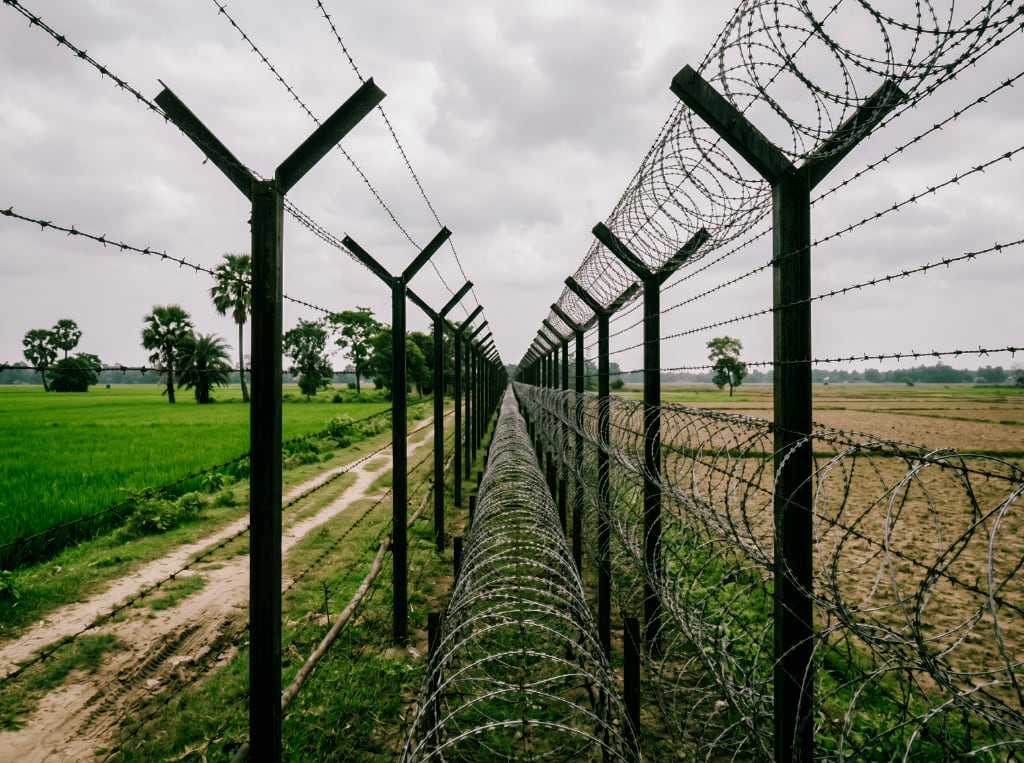
The BJP’s rise in Bengal rested on a foundation of “demographic anxiety,” a polite euphemism for a campaign fed by rhetoric on illegal migration and border insecurity.
Central to this shift was the tactical use of Bangladesh as a domestic political proxy. The fall of Sheikh Hasina’s government and the rise of Muhammad Yunus’s interim administration opened a timely vacuum, which the BJP filled with a narrative of existential threat.
In the party’s framing, the border became a sieve through which “infiltrators” were said to be diluting Hindu demographics. This anxiety was calibrated to appeal to the Matua community and other Dalit groups, long neglected by the bhadralok elite, who see the Citizenship Amendment Act as their main vehicle for legal belonging.
By championing the CAA, the BJP peeled away large Dalit and OBC cohorts from the TMC’s grasp, proving that Hindutva can be as much about social inclusion for the marginalized as it is about exclusion of the “other.”
Such themes are potent electoral currency in India, but they translate poorly into diplomacy. To a BNP government in Dhaka, this rhetoric sounds less like administrative concern and more like the systemic stigmatization of Bengali Muslims. The result is an immediate paradox for New Delhi.
Indian Prime Minister Narendra Modi’s government has shown a pragmatic willingness to engage with Tarique Rahman’s administration, moving past old loyalties. But if the new BJP satrapy in Kolkata keeps amplifying the rhetoric that alienates the Bangladeshi public, India risks a debilitating dissonance: speaking the language of partnership in New Delhi while shouting the language of polarization in Kolkata.
The media’s role in this consolidation was indispensable. A steady diet of reportage on the vulnerability of Hindus in post-Hasina Bangladesh nationalized what was, on paper, a state election. When Indian news outlets played up the influence of Islamist elements in Dhaka during the interim regime, they supplied the “proof” for the BJP’s warnings of a spillover effect.
This created a potent feedback loop in which foreign instability became a domestic electoral asset. The BJP’s slogan, “detect, delete, deport,” served as a security guarantee for a fearful electorate, rebranding the party as the only credible guardian of the frontier.
Narrative alone does not win elections of this magnitude. Beneath the grand stories of nationalism lay a ruthless organizational pivot.
For decades, the Left and the TMC held power through a “party-society” model in which local cadres mediated everything from dispute resolution to welfare access. The BJP dismantled this architecture by building its own organizational machinery, often recruiting disillusioned lower-tier cadres from both formations.
This allowed the party to match, and in many cases surpass, its rivals in booth-level management.
The BJP’s success also rested on its ability to pair this grassroots muscle with a compelling economic narrative. While the TMC relied on a populist cocktail of welfare schemes and direct cash transfers, the BJP countered with the promise of “double-engine growth”: the idea that a state governed by the same party as the Centre would see an influx of infrastructure and industry.
This economic pitch resonated with a youth population weary of stagnation and a middle class frustrated by the entrenched syndicate raj (cartel rule). By framing the TMC as a party of local corruption and itself as a vehicle for national aspiration, the BJP captured both the disgruntled youth and an older voter base anxious about security.
There is a tantalizing upside to this alignment. For years, the dispute over the Teesta River’s waters has been held hostage by the federal structure of Indian democracy.
Mamata Banerjee was the lone “Dr. No” who consistently vetoed a deal brokered by the Centre. With a BJP government in West Bengal now in lockstep with New Delhi, the “Mamata Veto” has evaporated. On paper, the path to a Teesta agreement is clearer than it has been in a generation.
For a parched northern Bangladesh, this would be a material windfall, one that could buy the BJP substantial goodwill.
Yet cynicism remains a useful tool for the regional observer. Water is as much a local political obsession as a diplomatic one. A BJP Chief Minister in Kolkata will still answer to the same agrarian constituencies that once resisted such agreements.
And modern Bangladesh is not the compliant junior partner of yesteryear. The Rahman government operates in a multipolar neighborhood, diversifying its alliances and shrinking India’s once-dominant leverage.
The strategic dilemma for Dhaka now lies bare. Under the TMC, the relationship was one of cultural comfort but structural stagnation. Mamata shared the language and the songs, but she blocked the rivers and the roads. The BJP offers the inverse: a partner likely to be ruthlessly efficient in clearing trade corridors and connectivity projects, but one whose political identity rests on a narrative that many in Bangladesh find hostile.
The election suggests that the “Bengal Exception,” the idea that the state’s unique cultural synthesis was immune to saffron politics, is dead.
The BJP’s victory marks the triumph of what some call “subaltern Hindutva,” in which the language of religious identity supplies a new vocabulary for old class and caste grievances. The victory is therefore not only electoral; it is civilizational in its implications, marking a deep shift in how identity, belonging, and power are bargained over in eastern India.
In this new political landscape, the border with Bangladesh is no longer just a diplomatic question; it is the central pillar of a permanent campaign. The irony is stark. The strategy has delivered a historic mandate in Kolkata, but it risks turning the neighborhood into a theater of perpetual friction, trading lasting regional stability for the quick rewards of the ballot box.
The verdict from West Bengal signals that the era of “sentimental diplomacy” is over. The shared heritage of Rabindranath Tagore and Kazi Nazrul Islam, still evocative, is yielding to the harsh realities of identity politics and national interest.
If the BJP uses its mandate to treat the border as a wound to be dressed rather than a bridge to be built, mistrust will only deepen. But if New Delhi can use this mandate to settle old grievances like Teesta, it may yet turn a moment of rupture into one of resolution.
The result in Kolkata is a victory for the BJP’s machine; the test now is whether it can become a victory for Indian statesmanship.