


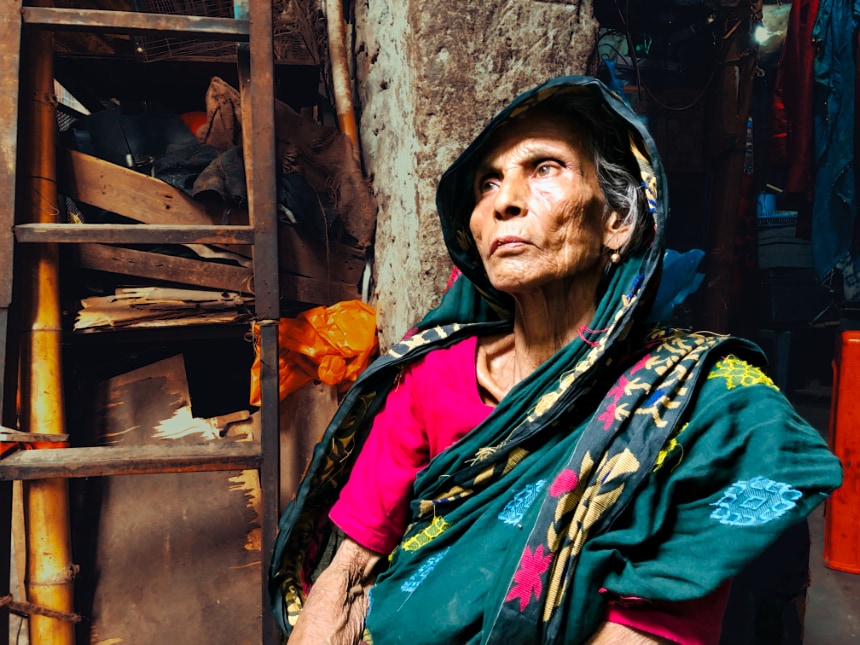
Anwara Begum lives in a one-room house beside a narrow road in Dhaka’s Kalyanpur slum. The light stays on during the day because the room has no windows. Frequent power cuts leave the house in darkness for hours.
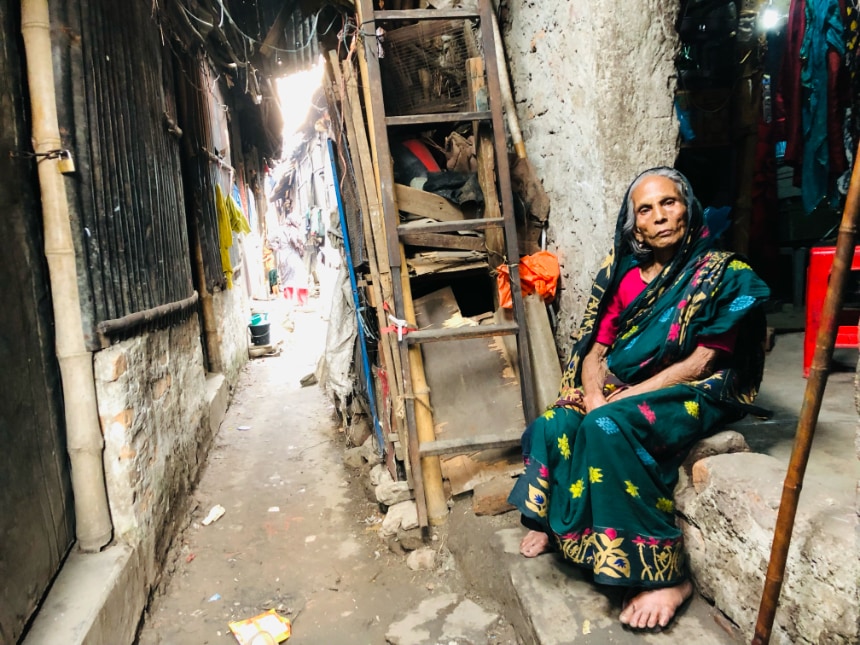
Every morning, Anwara sits in front of her door feeding rice to the chickens she keeps in a cage on the road outside. She is 75. She wears a faded saree.
In 1973, floodwaters from the Meghna River destroyed her home in Bhola, a district on the Bay of Bengal. She came to Dhaka with her four children. More than seven million people in Bangladesh have been displaced by climate change since 1971, according to the World Health Organization. Anwara was among the first.
“In Bhola, some people from my area helped put me and my children on a launch. The next morning, we arrived at Sadarghat in Dhaka. I did not know where to go with my children. My husband stayed behind in Bhola,” she said.
“After arriving, I wandered through different parts of Dhaka. For some time, I stayed with someone from my village in Tongi. Then I moved to Motijheel, where we lived in a tiny room behind a cinema hall. For many days, we had little food, often just a loaf of bread. Sometimes, the cinema’s janitor would give me food. Later, I found work as a housemaid in Mohammadpur. My husband joined me in Dhaka, but soon after, he fell ill and died.”
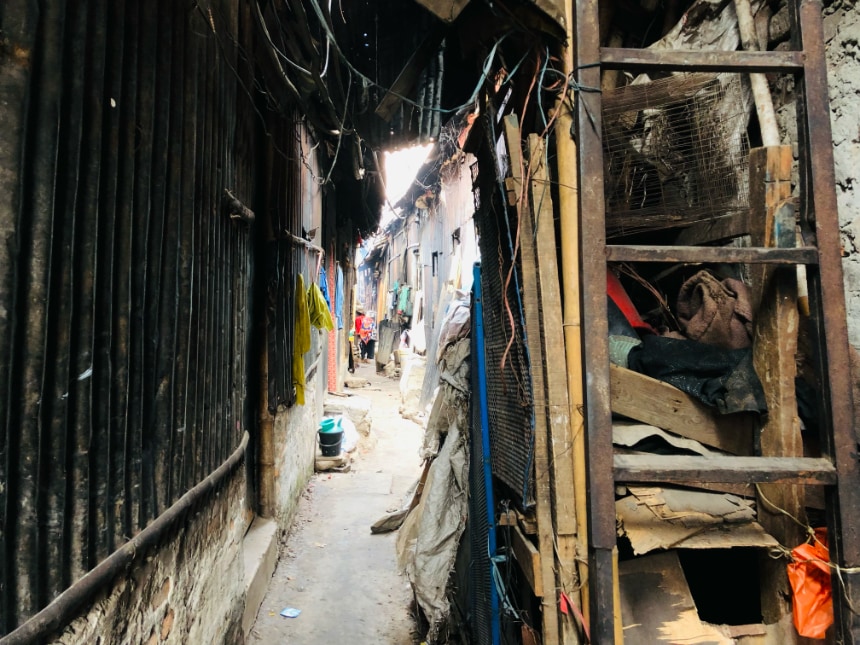
Anwara paused and breathed. She settled in Kalyanpur slum in 1988 after years of moving through the city. She has lived there for 36 years. She has spent 51 years in Dhaka.
“All my life, I worked as a domestic worker and a brick breaker, earning almost nothing. Now I no longer have the strength to work. I depend on my daughters. In old age, I have nothing. I am helpless.”
Tears filled her eyes. She wiped them with the edge of her saree while her eldest daughter, Sahana, handed her a glass of water. Anwara drank it in front of her door.
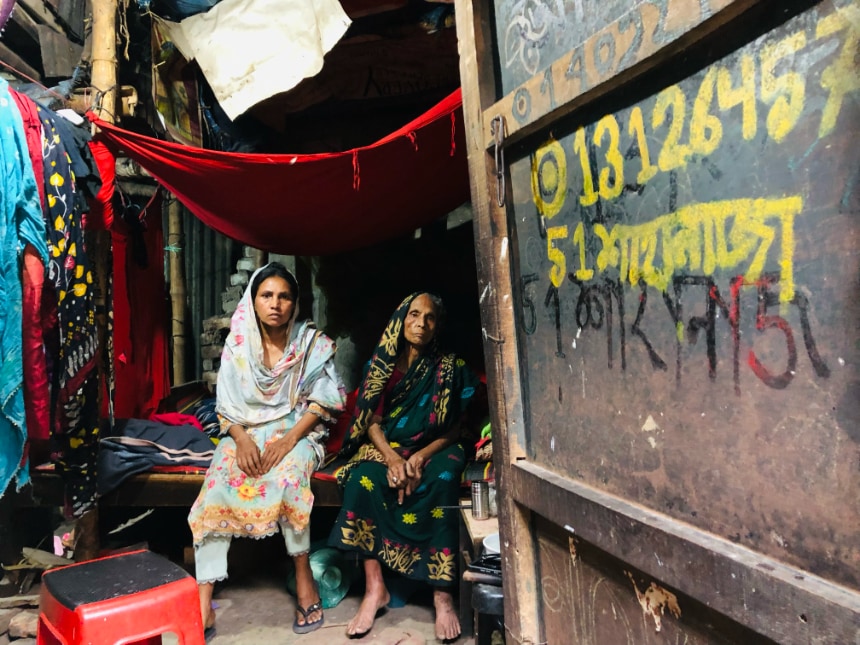
Sahana takes care of her now. Sahana’s husband left her. She raises her daughter, Shiuli, alone. Shiuli is 13 and studies in class seven at a government school in Kalyanpur. The three of them share the one-room house.
Sahana wants to arrange Shiuli’s marriage. She believes that the sooner her daughter is married, the safer she will be. Dhaka’s slums are dangerous for teenage girls. Marriage, in Sahana’s calculation, offers protection that Kalyanpur cannot.
“We lost everything in the village, and even here in the city, we have no decent place to live,” Anwara said. “Our only shelter is this filthy, unhealthy slum. I have spent my whole life here.”
“I came to Dhaka hoping for a better life, but nothing changed. My life of suffering has remained a life of suffering.”
“I never received a single taka of help from anyone. The river did not just take away our house. It destroyed our entire lives.”
She paused again.
“Now I do not even have a place for my own grave.”
A 2021 World Bank report projects that climate change could displace more than 13 million people in Bangladesh by 2050. Former Dhaka South City Corporation mayor Fazle Noor Taposh has estimated that 2,000 people move to Dhaka every day, and that 70 percent of them are climate migrants. They arrive looking for what Anwara looked for half a century ago. Most find the same answer she did: a slum, a small room, and a city that offers survival without dignity.