





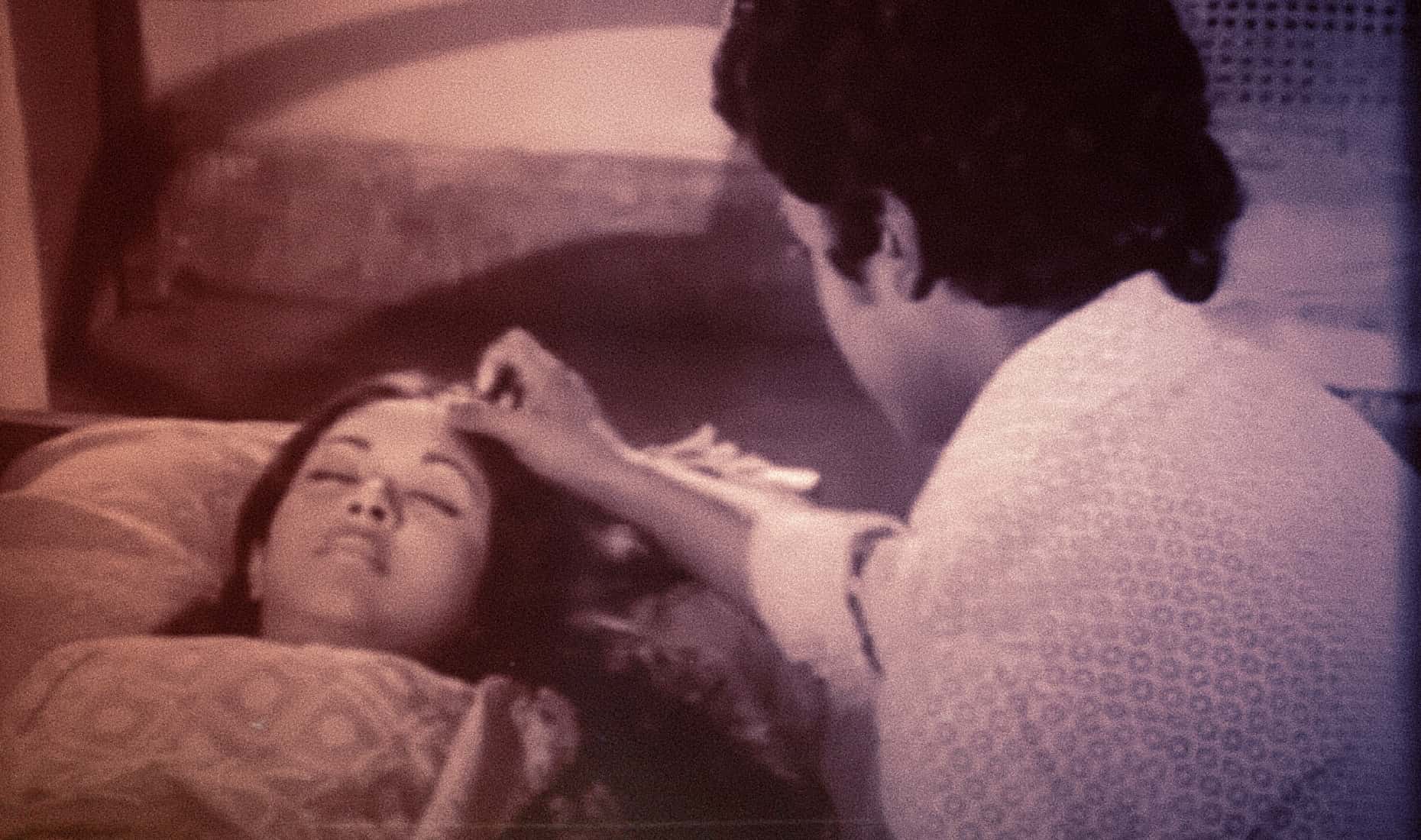
Hollywood loves to congratulate itself on its originality. When the 1987 hit Mannequin turned a department store dummy into a bubbly romantic fantasy, studios marketed it as clever, playful, and new. Yet more than a decade earlier, far from neon malls and pop soundtracks, a quieter and more dangerous dream had already taken shape in Dhaka.
In March 1975, only four years after a war of independence scarred by genocide, Bangladesh released Surjo Konna: a surrealist love film in which a sculpted woman comes to life. She awakens not to accessorize capitalism, but to ask a terrifying question. What does it mean to become human after being treated as an object?
That question separates the two films more than time or geography ever could.
One Premise, Two Opposite Worlds
Both films share the same conceit. An artist creates a woman. She awakens. But beneath that similarity lies a chasm.
In Surjo Konna, the sculptor enters his workshop at midnight. The clock strikes. Shadows stretch across unfinished bodies. Slowly, almost hesitantly, the mannequin lifts her arm and sings:
“Ami je andhare bondini, amake alote deke nao.” (I am incarcerated in darkness; summon me into the light.)
There is no glitter, no montage, no exuberance. What emerges instead is a demand. This is not a woman waking into romance. This is a consciousness waking into history.
In Mannequin, the awakening looks nothing like this. Kim Cattrall’s Emmy springs to life in a Philadelphia department store, laughing, flirting, striking poses. She redesigns window displays that save a struggling business. She boosts a young man’s confidence and career. The film treats her animation as a gift to him, not a crisis for her. She never asks what she is or what she was before. She simply performs.
The difference is not merely cinematic. It is philosophical.
How Surjo Konna Thinks in Images
The politics of Surjo Konna live in its form. The camera often refuses movement, holding long static shots on the mannequin’s body. Even as she awakens, the frame remains rigid. It reproduces confinement visually. Where Western musicals fracture emotion through rapid cuts, Surjo Konna holds its breath. Stillness becomes metaphor. The frame itself becomes a cell.
Music refuses ornament too. “Ami Je Andhare Bondini” is not a decorative song. It is an interior manifesto. The lyric does not plead to a man. It addresses society itself. This shift from personal to collective address is where the film’s feminism begins.
The mannequin is not conventionally beautiful. Her body resists consumption. She does not flatter the gaze. She confronts it. In that refusal, she becomes many things at once: a silenced woman, an invisible worker, a revolutionary promise betrayed.
Bangladesh 1975: Awakening After Catastrophe
This kind of film could only emerge from a wounded nation. In 1975, Bangladesh was grieving mass death, facing famine, and watching its egalitarian dreams erode under gathering authoritarianism. The promise of socialism still lingered, but it was fragile. Women who had fought and suffered during the liberation war were being pressed back into invisibility.
Within this broken reality, the mannequin’s awakening gains its force. Her animation is not fantasy. It is allegory. Her question belongs to the nation itself: Am I free, or merely renamed?
To awaken, the film suggests, is to demand recognition.
America 1987: When Freedom Became Shopping
Mannequin belongs to a different moment. By 1987, the United States was deep into the ideology of Reaganomics: deregulation, trickle down economics, and shopping as civic virtue. Malls were no longer retail spaces alone. They were cathedrals of identity. That year, retail sales at American malls climbed sharply, an index of how identity had fused with consumption.
In this world, the mannequin embodies confidence without memory. She has no history to mourn, no oppression to name. Her liberation is assumed, not fought for. Desire replaces justice. Style replaces struggle.
This is not a failure of imagination. It is the imagination of a system that no longer needs to ask who remains unseen.
Recognition and Becoming Human
To live means to be recognized. To be recognized is to be loved. In Surjo Konna, this idea is not sentimental. Recognition is ethical. A being long reduced to an object must first assert existence. Recognition is the first moral response one human offers another. Sustained, it becomes love. Not romantic love alone, but political love.
That is why the mannequin in Surjo Konna does not flirt her way into humanity. She insists on it.
Mannequin never grasps this. Emmy exists to be seen by one man, not to be recognized by a society. Her awakening confirms his worth, not hers. She is, in the end, still an accessory. She just moves now.
Who Dreamed First, and Why We Forgot
Surjo Konna reached theaters in March 1975. The first drafts of Mannequin’s screenplay began circulating around 1982. Chronology matters, but distribution matters more.
By the 1980s, Hollywood studios operated pipelines into more than 200 countries. Bangladeshi cinema depended almost entirely on domestic exhibition and struggled even to preserve its prints. Global memory is not neutral. It follows capital.
The world remembers Mannequin not because it was deeper, but because it was exportable.
Reclaiming the Forgotten Dream
Surjo Konna is a small cinema with immense philosophical ambition. It collapses love into liberation, aesthetics into ethics, magic into history. It belongs in the global lineage of magical realism, feminist awakening, and allegory of liberation, but it whispers where Hollywood shouts.
Hollywood painted the dream in neon. Dhaka shaped it out of darkness.
The mannequin who sings at midnight still waits to be recognized.