





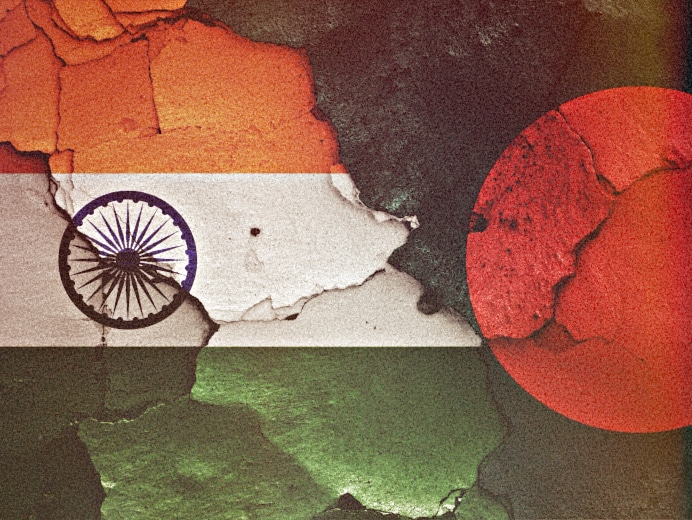
India is relieved. You can feel it in the diplomatic choreography. Modi congratulated Tarique Rahman before the results were official. Dr S Jaishankar flew to Dhaka for Khaleda Zia’s funeral. Foreign Minister Khalilur Rahman is now in New Delhi for talks with his Indian counterpart, the first senior-level visit by a member of the new BNP government. The signs are all there. South Block’s language has shifted from cold silence to measured warmth. “Repairing ties.” “A new phase.” “Democratic, progressive, inclusive Bangladesh.” After eighteen months of strained relations, New Delhi is exhaling.
But relief is not friendship. And a reset differs from a reckoning. Before India’s warmth defines the terms of this relationship going forward, a more complicated history deserves examination. India did not always feel this way about the BNP. Not in 1991. Definitely not in 2001. The party that New Delhi now carefully courts is the same party that, for two consecutive democratic tenures, represented one of its most difficult bilateral relationships in the region.
When Khaleda Zia led the BNP to victory in 1991, India responded with cautious distance. The BNP had been built, ideologically, as a corrective to the Mujib era. Its Bangladeshi nationalism was a deliberate departure from the Bangladeshi-Indian cultural intimacy that the Awami League had always embodied. For New Delhi, the Awami League was a natural partner, rooted in the shared history of 1971. The BNP occupied different political ground. Relations during 1991–96 were transactional and managed, without particular warmth on either side. When Hasina won in 1996, Delhi moved quickly. The Ganges Water Treaty followed within months. The preference was clear.
The 2001–06 BNP-Jamaat government presented a different order of difficulty. That period occupies a specific place in Indian strategic memory as a genuine bilateral crisis, not a diplomatic inconvenience. Indian officials publicly accused Dhaka of allowing anti-India insurgent groups to operate from Bangladeshi territory. Senior NDA ministers, including L.K. Advani and Yashwant Sinha, made statements about al-Qaeda elements sheltered on Bangladeshi soil. Then came the Chittagong arms haul of 2004: ten truckloads of weapons allegedly destined for Indian rebel groups. Whatever diplomatic goodwill remained came under serious strain. The Khaleda Zia government signed major Chinese defense deals that New Delhi read as a strategic signal. Around that time a proposed $3 billion Tata investment in Bangladesh collapsed. Transit arrangements were firmly refused.
History suggests that India’s current cordiality towards the BNP is a development shaped more by the past two years. Sheikh Hasina’s government, for over fifteen years, became India’s most reliable partner in Dhaka. Counterinsurgency cooperation, connectivity projects to the Northeast, a consistent check on Pakistani intelligence activity in Bangladesh. The relationship delivered on India’s core security and economic interests. When the uprising of July-August 2024 swept Hasina from power, India faced a strategic disruption it had not anticipated.
The Yunus-led interim government presented India with a series of compounding difficulties. Dhaka formally demanded Hasina’s extradition after her trial and conviction. Bilateral issues that had previously been handled through discreet diplomatic channels were raised publicly and in international forums. India suspended tourist visa services at several Bangladesh consular locations. Overtures towards other neighbors, including discussions on defense procurement and new maritime links between Chittagong and Karachi, were read as a deliberate reorientation.
Against this backdrop, the BNP’s landslide on February 12, 2026 was, for India, less a democratic outcome to be celebrated than a crisis to be managed. New Delhi had spent eighteen months hoping the Yunus interim would fail quietly enough to be replaced by something more pliable. When it became clear that would not happen, that Bangladesh’s political realignment was structural, not incidental, India did what it has always done in the neighborhood: it picked the least uncomfortable option and dressed the preference up as principle. The congratulatory call before the votes were counted was not goodwill. It was positioning. India was not welcoming a democratic mandate; it was securing an entry point into a government it could not afford to be locked out of. The relief was real. But it was the relief of a regional power that had miscalculated badly and was now scrambling to recover lost ground.
An elected government with a democratic mandate and constitutional structures is an entity that India or any regional power with a history of leveraging its neighbors knows how to work with. You can negotiate with it, apply pressure through it, exploit its dependencies, reward its compliance. The Yunus interim had been frustrating precisely because it operated outside the usual grammar of bilateral leverage: unelected, yet it held the whole country’s mandate, internationally legitimized despite the flood of disinformation, and answerable to a street uprising instead of the kind of institutional interests that India has historically known how to influence.
At the same time, India’s strategic anxieties have not disappeared; they have been deprioritized. Jamaat-e-Islami’s surge to over sixty parliamentary seats from a historical ceiling of around eighteen is a development that Indian analysts are watching carefully, particularly given Jamaat’s geographic concentration in constituencies along the border. We would be fools if we thought the historical associations between the BNP-Jamaat coalition and the crises of 2001–06 have been forgotten in South Block.
What is largely absent from India’s reset narrative is any honest reckoning with why the relationship collapsed in the first place and more importantly, who bears responsibility for it. India did not stand by while Hasina dismantled Bangladesh’s democratic institutions; it actively enabled her. New Delhi’s diplomatic cover, its silence on rigged elections, its framing of authoritarian consolidation as “stability”: these were not passive omissions. They were choices. And those choices, sustained over fifteen years, produced the deep structural anti-India sentiment that now runs through Bangladeshi public life like a fault line. The International Crisis Group noted plainly in December 2025 that India’s support for Hasina “fanned longstanding anti-Indian feeling in Bangladesh, contributing to her ouster.” Chatham House echoed it. These assessments come from institutions that India itself takes seriously, not Bangladeshi grievances being read back to India. The reset narrative that New Delhi is now constructing asks Bangladesh to move on without requiring India to account for what it moved on from. That is not diplomacy. That is the continuation of the same asymmetric logic by other means.
These are structural observations. They describe an accumulated pattern of a relationship built around a single political anchor, of bilateral asymmetries that generated resentment over years, of an Indian foreign policy posture in the neighborhood that has repeatedly struggled to outlast the governments it was built around. These describe an accumulated pattern, not a temporary diplomatic rupture. The Neighbourhood First policy has faced similar difficulties in Nepal, Sri Lanka, and the Maldives. Bangladesh is not an exception; it is part of a pattern.
The Khalilur Rahman visit carries a genuine agenda. Teesta water sharing, the tourist visa suspension, trade imbalances, border management, energy cooperation: these are substantive issues that affect ordinary people on both sides of the border. Movement on any of them would be meaningful. Two details from this visit deserve attention. Bangladesh raised the extradition of Faisal Karim Masud, prime accused in the murder of student leader Sharif Osman Hadi, who fled across the Meghalaya border into India after shooting Hadi in the head during an election campaign. This was placed squarely on the bilateral agenda. Khalilur Rahman also placed the extradition of Sheikh Hasina herself, sentenced to death by the International Crimes Tribunal, on the table. Regardless of what India decides, this is a sign that Bangladesh continues to use the backbone it gained after the 2024 uprising.
I hope BNP realizes that their own “Bangladesh Before All” foreign policy posture cannot be a campaign formulation alone. The public sentiment about the terms of Bangladesh’s relationship with India remains a live and sensitive issue. BNP’s own foreign affairs advisers have described the previous arrangement as one in which Dhaka lacked an equal voice. Any government in Bangladesh that is seen to be conceding that equality for the sake of Indian goodwill will face a political cost for it.
India can build a workable relationship with the BNP. Over time, it may become a genuinely productive one. But the relationship cannot replicate the terms of the Hasina era. That particular arrangement, whatever its strategic utility for India, generated the conditions that destabilized it. The relief that India feels today is understandable. The structural questions it has not yet answered are real.