

A certain kind of geography almost killed our love of reading. Almost.
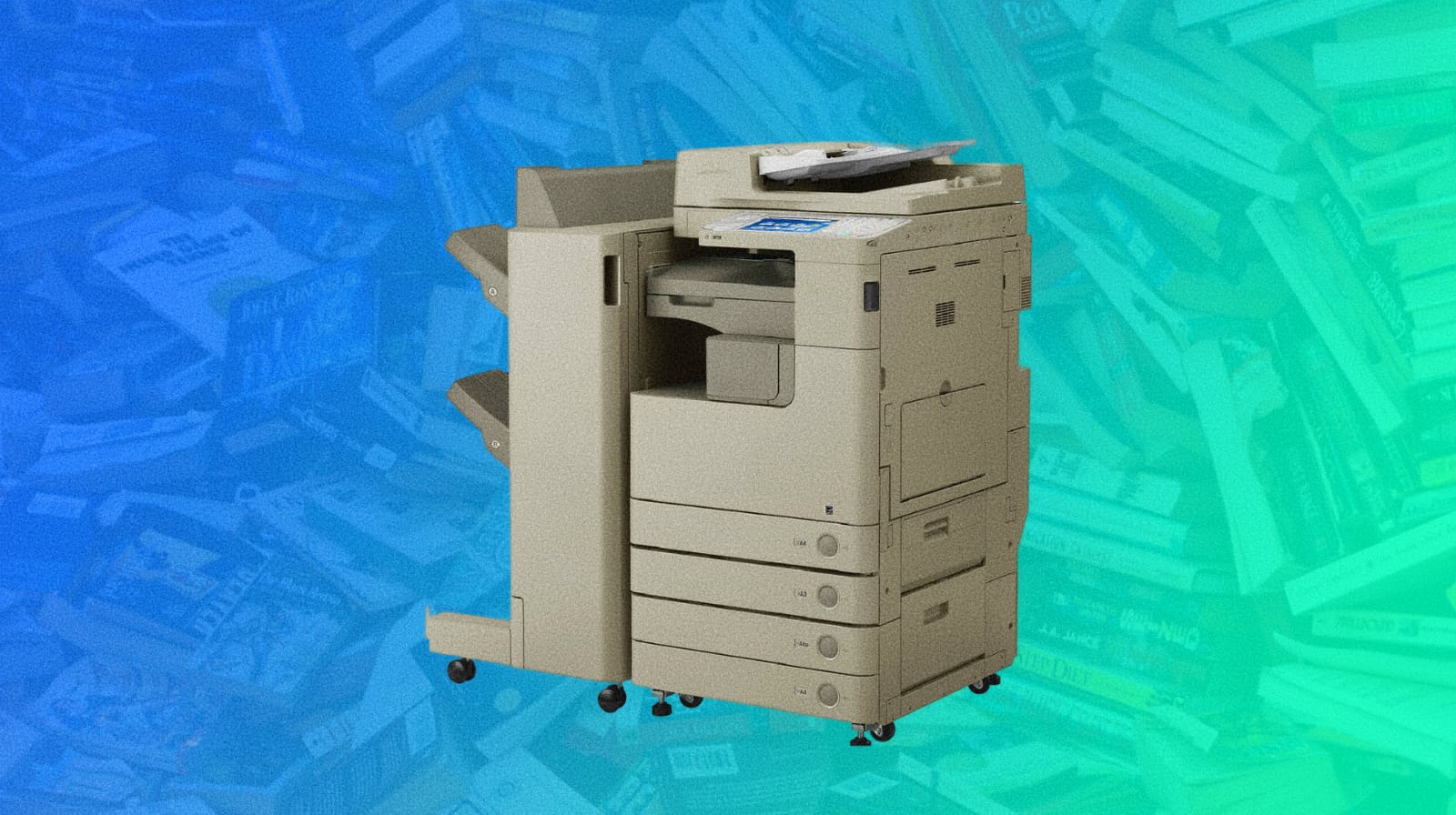
My generation of readers growing up in Dhaka in the 1990s was saved and shaped by photocopied books. They were not pirated in the grand, criminal sense. They were imperfect shadows of the real thing: Crooked margins, grainy ink and the occasional missing page, which charged the imagination to fill in the blanks.
This was not an act of rebellion. It was simply how literature reached us: as an afterimage. The original object existed somewhere else – in London, perhaps, or New York. What arrived in our hands was its echo. Stapled. Faded. Often bearing the purple seal of a bookseller from Nilkhet, the neighbourhood near Dhaka University that functioned as the city’s unofficial republic of books. Nilkhet defied copyright with cheerful efficiency. If a single copy of a book existed anywhere in the city, it could be reproduced and rebound in plastic covers sturdy enough to survive years of circulation.
Our formal education in literature at school did little to inspire us. Teachers delivered English through classic texts, via Shakespeare and Dickens and memorised “Tyger Tyger” poems, often seeming as disengaged as their students (and equally incapable of explaining why Blake chose to spell tiger that way.) We used to joke the English teacher was simply someone who couldn’t land a job in the Foreign Service. The problem, I later realised, was not the stories but the manner of their delivery. We were hungry for voices that felt closer to our own moment. Contemporary fiction offered not just escape but connection, a glimpse of other lives that felt strangely legible to our own.
The photocopy machine made this possible.
If someone managed to obtain a book, a small group of us would pool our tiffin money, the crumpled bank notes meant for school snacks, and commission copies. Sometimes a photocopy was itself copied again, and then again. With each generation the text degraded slightly, as if distance were being measured in ink. By the third reproduction, entire sentences might fade into suggestion.
The shops that performed this quiet work were everywhere. Narrow rooms lit by fluorescent tubes, with machines that hummed without rest. The men who ran them approached the task with calm professionalism. You could bring them anything – a textbook, a passport, a manuscript, a certificate – and they would reproduce it faithfully enough. They always asked the same question: “Offset or plain?” Offset cost a little more and promised greater clarity. But even offset could not restore what had already been lost. The ink faded toward the spine. The text slipped into shadow. Occasionally a page disappeared altogether, and you discovered its absence only when the narrative stopped making sense. The magic realism of Garcia Marquez was on another level.
Contemporary classics did not belong to our geography, let alone newly published ones. They travelled slowly, if at all. When they did appear, they entered an informal circulation, passing from one private hand to another. A returning relative brought a novel from abroad. A teacher lent a cherished copy. Inevitably, it found its way to a photocopy shop.
None of this diminished the magic. If anything, it deepened it. What you held did not feel like a commodity. It felt like access.
We did not worry too much about the sensual pleasure readers associate with books: the weight of good paper, the sharpness of fresh print, the cover design, a detail on the font used – all hallmarks of the quiet authority of a well-made object. My books were warm from the machine, their bindings improvised, their covers arbitrary. They possessed no aesthetic confidence. Only the authority of survival.
This culture of reproduction even gave me my first experience of publishing. (Publishing is a noble word, I hasten to add, and my attempt was small.) As a teenager, I lamented our school not having a paper, a magazine. I had no interest in the annual yearbook, published with our mugshots, a copy of which we were forced to buy for the pleasure of seeing people we already saw every day. When my litany of complaints went unregistered, I started a monthly journal called The Spectrum. I solicited poems and stories from friends, who gave me handwritten pieces. I compiled them and took them to be typed by professional typists who sat waiting beside the photocopy machines, then produced stapled editions for circulation. I sold them at cost. Contributors paid in solidarity; everyone else expected free copies. We were glad to pass the copy along. The spirit was collegial, almost without anyone intending it. Some readers left comments and drawings in the margins, with the occasional heart sign that made ours race and filled the days with restless curiosity. As exams took precedence, the magazine shrank into a single notebook, moving quietly from hand to hand. In its modest way, it was a literary commons, and now a happy memory.
Years later, as one of the organisers of the Dhaka Literary Festival, I encountered the structural side of the same problem. Visiting authors wanted their books to be available to readers. Bangladesh lacked the local publishing imprints that existed in India, where international publishers printed affordable regional editions. Foreign books remained expensive. Importing them into Bangladesh was complicated by foreign exchange constraints, high shipping costs and long delays at customs. The local joke is that customs officers are avid readers, not the sort to let a free reading opportunity slip by.
Theoretically, the economic reforms of trade liberalisation in the early 90s meant no duty on imported books. In practice, they remained scarce in an era before the internet, when we had only two television channels, both terrible. The barrier was not censorship, except if the author managed to obtain a fatwa. It was distance, and the economics of access. Literature did not arrive through some trade policy. For our generation it arrived through photocopiers.
In London, where I live today, books exist in abundance and in their intended forms. Bookshops present them in carefully curated displays. They wait patiently to be chosen. The colourful spines draw you in, and before you know, you have spent hours browsing. Nothing about their existence feels uncertain.
And yet, I sometimes find myself thinking about those earlier copies. Faint, stapled, and slightly askew, they travelled further to reach me than any book I now own. Those offset pages with colourless spines meant so much to us, and only because of our geographical reality. Perhaps that is why I have spent much of my adult life trying to shorten that distance. Through festivals, gatherings and small acts of convening, I have tried to create spaces where ideas arrive intact, and where access does not depend on accident or endurance.
In the end, it was not I who had arrived at literature. It was literature that had arrived, imperfectly and against the odds, at me.