



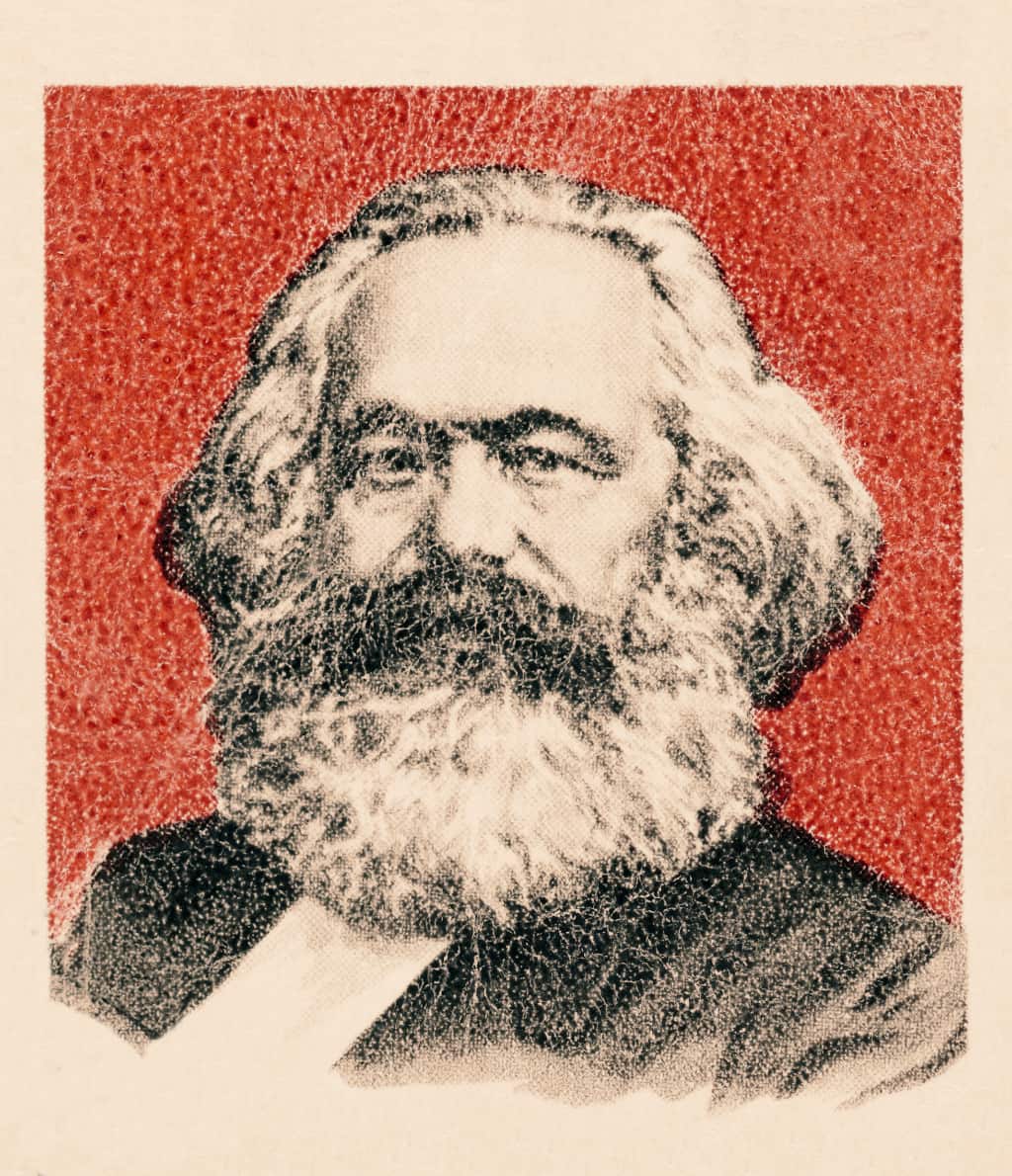
During my Communist Party of Bangladesh days, back when political meetings served as greater hubs of intellectual discussion than libraries, I noticed a curious thing. Party comrades proudly deemed themselves Marxist-Leninists. Yet only a handful of them had actually read Karl Marx’s writings.
Some gave it an honest shot, only to give up within days. Most avoided the books altogether, as if their copies of Das Kapital were made of radioactive material.
Sometimes, amidst well-intentioned, playful banter, I posed a simple question: “Can you list some books authored by Marx?”
Heavy silence ensued, laced with sheepish smiles.
Someone would mutter: “The Communist Manifesto.” As if that single title could carry the weight of an entire worldview.
I wasn’t much better off. I didn’t grow up devouring the words of Marx either. Like many others, I reached that threshold later in life, guided by age, pushed by failure, and, finally, propelled by necessity.
By the time I entered my PhD program, Marx stopped being an option on the bookshelf. He became an unavoidable companion, helping you make sense of the world around you.
My dissertation revolved around one stubborn question: the mechanics of how China does not allow its bourgeoisie to transform from “a class in itself” into “a class for itself.” A complex and nuanced topic, Marx’s writings were a natural next step, but in which of his books did he theorize this distinction?
My best guess, of course, was somewhere in Das Kapital or Capital: A Critique of Political Economy. If not that, it would perhaps be wedged within the pages of some dense philosophical manuscript.
To my surprise, the idea was nestled instead within a somewhat obscure book with a strange, poetic, and, for me, entirely cryptic name:
The Eighteenth Brumaire of Louis Bonaparte.
French peasants, political silence, and a missed revolution
Marx introduces the concept of “class in itself” versus “class for itself” not through abstract theory, but through a historical puzzle.
During the revolutionary turbulence of mid-19th century France, the peasants outnumbered everyone and faced oppression from aristocrats. Why did they fail to become a revolutionary force? Why, under Louis Bonaparte, did they not rise against those who exploited them, even when conditions seemed ripe?
Marx’s answer was brutal in its simplicity: though the peasants shared material conditions and struggles, they lacked the vital factors of political consciousness, organization, and a collective voice.
They were a class in itself, but not for itself. In other words, this class of people shared common grievances and struggles. But they did not realize the power they could wield as an organized unit, one based on their shared identity.
It is also in this book that Marx delivers his most famous and perhaps most misunderstood line:
“Hegel remarks somewhere that all great world-historic facts and personages appear, so to speak, twice. He forgot to add: the first time as tragedy, the second time as farce.”
Marx wasn’t simply being witty for the sake of it. He was diagnosing our society with a deep-rooted condition: when history loses its material force and survives only in forms of memory, imitation, and symbolism, it gets reduced to a cheap parody of what it truly is.
But before I could fully appreciate and ponder these words of wisdom, another question nagged me.
What on earth was Brumaire?
When time itself became revolutionary
Brumaire wasn’t a metaphor Marx invented.
It was the name of a month from the French Revolutionary Calendar.
Following the French Revolution, the insurgents who carried it out did something extraordinary: they tried to abolish not only monarchy and the Church, but also time itself.
In 1793, France introduced a new calendar to erase Christian and royal influence from daily life. Years would no longer be counted from Christ’s birth, but from the emergence of the nation as a Republic. Weeks were replaced with ten-day blocks, or décades, to break the traditional rhythm of the Sunday church cycle. Saints were no longer of importance. Nature took over theology in one fell swoop.
Months were renamed after seasons and the weather:
Vendémiaire (grape harvest); Brumaire (from brume, fog); Frimaire (cold); Germinal (sprouting); Thermidor (heat).
Time itself became secular, rational, and most important, revolutionary.
But as is often the case with the introduction of something unorthodox, the people of France could never accept this new lens of viewing time. This calendar felt imposed, bureaucratic and alien.
Finally, once it became clear that the people were not be bothered with its adoption, Napoleon I abolished the French Revolutionary Calendar in 1806 and restored the Gregorian one. This proved to be an early sign that even the revolutionary state could not revolutionize everyday life.
Fog, memory, and political theatre
So, why did Marx choose Brumaire to explain his concept?
And why did Louis Bonaparte go for 18 Brumaire for his coup?
Because Brumaire was not just a date. It was a memory, cloaked in the fog of disguise.
18 Brumaire, which fell on 9 November 1799, was the day Napoleon I seized power. It symbolized order after chaos, authority after revolution, and the end of uncertainty.
When Louis Bonaparte staged his coup in 1851, he deliberately recycled that date. He had no revolutionary legitimacy of his own, so he borrowed one. He didn’t recreate history; he quoted it.
Marx saw through this performance.
The fog of Brumaire then became a metaphor for political actors moving through historical mist, guided not by material forces, but by inherited symbols.
A tragedy became a farce.
Marx the poet (whether he admitted it or not)
At this point, I realized something party slogans failed to teach me.
Marx was not just an economist. Nor was he simply a philosopher. This man was a poet of history.
Look at the titles he chose for his books:
The German Ideology.
The Poverty of Philosophy.
The Communist Manifesto.
Capital.
Each title is a provocation. Like a carefully constructed trap, it leads you into a compressed argument.
And The Eighteenth Brumaire of Louis Bonaparte is perhaps Marx’s most poetic title of all. It’s one date, a singular foggy month. But beneath that facade, it reveals itself as an entire theory of power, memory, and political emptiness.
Marx believed readers should think before they read.
He was convinced that a title should unsettle you even before you begin poring over the pages within. He knew that history should not be explained as some distant occurrence, but felt in one’s bones.
This quality of Marx allowed him to change how we view the past. And it is why reading his work, truly reading it, is still a dangerous pursuit.
Not because Marx gives you the answers to longstanding riddles.
But because he teaches you how to see through the fog.
In praise of Marx, and the courage to read him
Those party comrades from my CPB years weren’t wrong to call themselves Marxists. They were just scared, as I had been, of stopping for a moment and truly seeing Marx for who he was. Because Marx doesn’t offer comfort. Not even to those who muster the courage to understand what he has to say. He offers exposure to the most complex and twisted truths of life and society.
And sometimes, all it takes to begin that journey, one well worth making despite the hardships, is a fascinating book title.