



“Teach them a lesson. Teach them hard.” President General Agha Mohammad Yahya Khan gave this mandate to Lieutenant General Mohammad Tikka Khan at the headquarters of Eastern Command in Dhaka.
It was the evening of March 24, 1971. The elite gathering in the Operations Room did not miss the grinding teeth and fierce voice of the stocky, chain smoking president. He had just given the go-ahead signal for “Operation Searchlight,” aimed at annihilating the Bengalis in East Pakistan.
Earlier, on February 22, the generals in Islamabad had made the decision. Four additional army divisions were to militarize East Pakistan. By the time Searchlight started, two full divisions (one from Karachi, the other from Quetta) had been airlifted to Dhaka.
“Kill three million of them,” said the president in that meeting, “and the rest will eat out of our hands.”
“We are ready, sir,” said the stoic Tikka, the military governor of the province. “Everything is lined up.” His deputies, Major General Rao Farman Ali, Major General Khadim Hossain Raja and Major General Abu Osman Mitha, nodded in agreement.
“It starts at Zero Hours tomorrow,” ordered the president.
Smoke Screen
President Yahya Khan had been in town for the past ten days, ostensibly to negotiate Pakistan’s future with majority leader Sheikh Mujibur Rahman, called Sheikh Mujib or Mujib by his people. His Awami League won the elections three months earlier. By March 24, the two sides appeared to have agreed on the major issues, and the charismatic Bengali politician was optimistic. He stood at the doorstep of becoming Pakistan’s next leader.
That same afternoon, the public saw nothing unusual when the presidential motorcade left the downtown Governor’s House (now Bangabhaban, the presidential palace) headed north to the military base twenty minutes away, and returned shortly afterwards. The official explanation was that the president went for tea with his colleagues. What people did not know was that the president was not inside the returning Flag Car.
Behind the facade of serious dialogue, ominous and rapid activities were underway within the military. Planes and ships loaded with troops and concealed armaments landed daily in Dhaka and Chittagong. On March 24, generals took helicopter rides to deliver top secret instructions to local commanders in Chittagong, Comilla, Jessore, Sylhet, Rajshahi and Rangpur.
In a meeting between Yahya and Mujib scheduled for March 25, the president was to make an important announcement on the transfer of power to elected representatives. An upbeat Mujib looked forward to his moment of glory.
The provincial capital was unusually calm on March 25 in an otherwise volatile political environment. Mujib waited all day for the promised meeting and declaration. Most Bengalis had grown skeptical by now, suspicious of the military’s intentions. Top aides tried and failed to convince Mujib not to trust the generals.
In the afternoon, a black Mercedes left military Command Headquarters and took an internal route through the Air Force gate to arrive at nearby Tejgaon Airport. A Pakistan International Airlines Boeing 707 was preparing to take off. Group Captain A Karim Khandakar, a grounded Bengali pilot, was curious as he looked out through his office window.
“I see the president leaving,” he said over the phone to his friend, retired Squadron Leader Mirza, who had political connections. “Do we have a deal?” Like most conscientious persons following the political discourse, Khandakar wanted to know if the central leaders and the Awami League had come to an understanding.
“Not that I know,” replied Mirza. “Let me check.”
Shortly before March 25, the military junta had grounded all Bengali pilots. Bengali personnel in the military, paramilitary rifles and police in East Pakistan were disarmed. No reason given.
Several foreign journalists defied military orders to leave Dhaka and stayed in the city. I depended largely on their accounts and subsequent written materials for the events that followed.
An almost full moon surrounded by twinkling stars commanded the midnight sky. Dhaka, a city of six million, was resting, despite the political uncertainties that had overwhelmed the province for weeks. The destitute, the beggars and homeless men, women and children claimed most of the downtown sidewalks. Dogs fought in the garbage nearby; jackals howled at a distance and owls hooted in the trees as rickshaws and three-wheeled baby taxis patrolled the streets looking for nightly riders.
Then the cranking noise of military machines broke the quiet serenity of the night. American M-24 tanks rolled out of the cantonment, their main guns swiveling on turrets like raised cobras with exposed fangs, itching to hurl their venom. Mobile columns carrying troops with loaded Chinese automatics followed for the groundwork. US-supplied F-86 fighter bombers sat ready at takeoff points, poised to strike. Artillery cannons were zeroed on Dhaka University, the paramilitary rifles headquarters at Peelkhana, the Police Centre at Rajarbagh and the old town’s dense residential quarters.
Military Fireworks
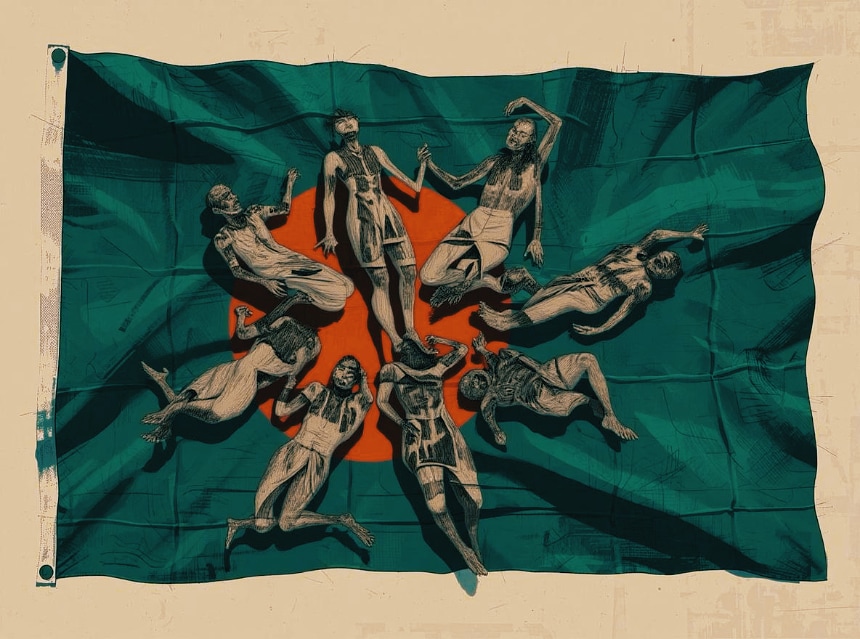
Thirty minutes past midnight, the fireworks began. For the Bengalis of East Pakistan, Doomsday had arrived. It was Jallianwala Bagh, Nanking and Pearl Harbor combined. It was the start of the Million Kills. Before the unarmed and unsuspecting residents knew what had happened, a few thousand lay dead.
Surviving university students never knew why their dormitories were shelled, crushing thousands of their classmates under the debris. Few boarders at girls’ hostels returned to their families. Most succumbed to gang rapes; some committed suicide, choosing death over dishonour.
Rahima, a woman in middle age, would never know why her husband, four children and a few hundred other destitute at Gulistan became victims of military brush fires. A racing military truck crushed the wandering woman two days later, saving her from the agony of loss.
Samad, a young passenger at the Kamalapur Railway Station, heard the staccato of machine guns and dived into a nearby garbage bin; he could not make out why 200 other passengers fell to their deaths on the platform.
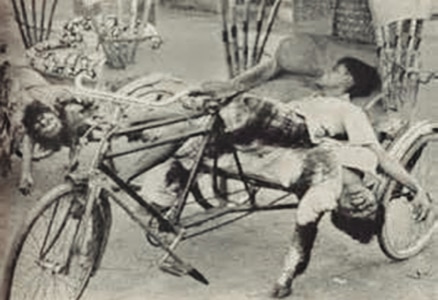
Late night shoppers bled and collapsed at Nawabpur, Sadarghat and New Market. Rickshaw drivers would never see fare again, nor would cart pullers ever see another sunrise.
Outside Dhaka, local military commanders staged their own operations, following directions contained in the top secret packets they received a day earlier.
The next morning, streets and marketplaces lay covered with mutilated bodies, as if the Kurukshetra (the mythical battleground of the Mahabharata) had spilled from legend into the streets, while the killing continued throughout the day.
An exodus of panicked city residents commenced, but few reached safety. The army sank boats, bombed trains and torched buses.
Oblivious to the mayhem, dogs, crows and fish in the waters feasted on human flesh. In the countryside, vultures and eagles joined in for their share of the bounty.
International journalists who stayed within the safe zone of the Hotel Intercontinental, defying the military orders to leave, leaked bits of news to a shocked world.
Death Toll
On March 28, 1971, the New York Times put the two-day death toll in Operation Searchlight at 10,000. Four days later, that same newspaper said 35,000 were killed in Dhaka alone. The Sydney Morning Herald of March 29 estimated the number between 10,000 and 100,000. The International Herald Tribune on March 30 quoted an eyewitness who gave the number murdered in Dhaka at 7,000. The Daily Telegraph on March 29 reported that the shelling of the capital had been indiscriminate and cold blooded, with almost no sign of armed resistance. According to the New York Times of April 12, troops had been “utterly merciless.” A month later, the Times reported that 80,000 Punjabi and Pathan soldiers had killed an estimated 300,000 Bengalis by the end of April.
Within hours after ordering Operation Searchlight, President Yahya Khan addressed the nation from a safe distance in Karachi. He put the entire blame on Sheikh Mujibur Rahman for the failure of the Dhaka talks. He did not say a word about the butchery he had ordered.
Tikka Khan had earlier earned the title “Butcher of Balochistan” for crushing political dissidents in that province. He now added a new title: “Butcher of Bangal.”
The sins of the Bengalis? They dared to demand freedom from exploitation by their military and Punjabi overlords. They were audacious enough to ask for economic emancipation, administrative equality and political fair play.
Most Bengali leaders who did not face immediate bullets went into hiding. Sheikh Mujib did not. An army commando group picked up the tall, dark, bespectacled politician from his residence without any resistance.
A week later, newspapers featured a pensive Mujib wearing his traditional white kurta pajama and sleeveless black coat. He was at Karachi Airport, surrounded by police.
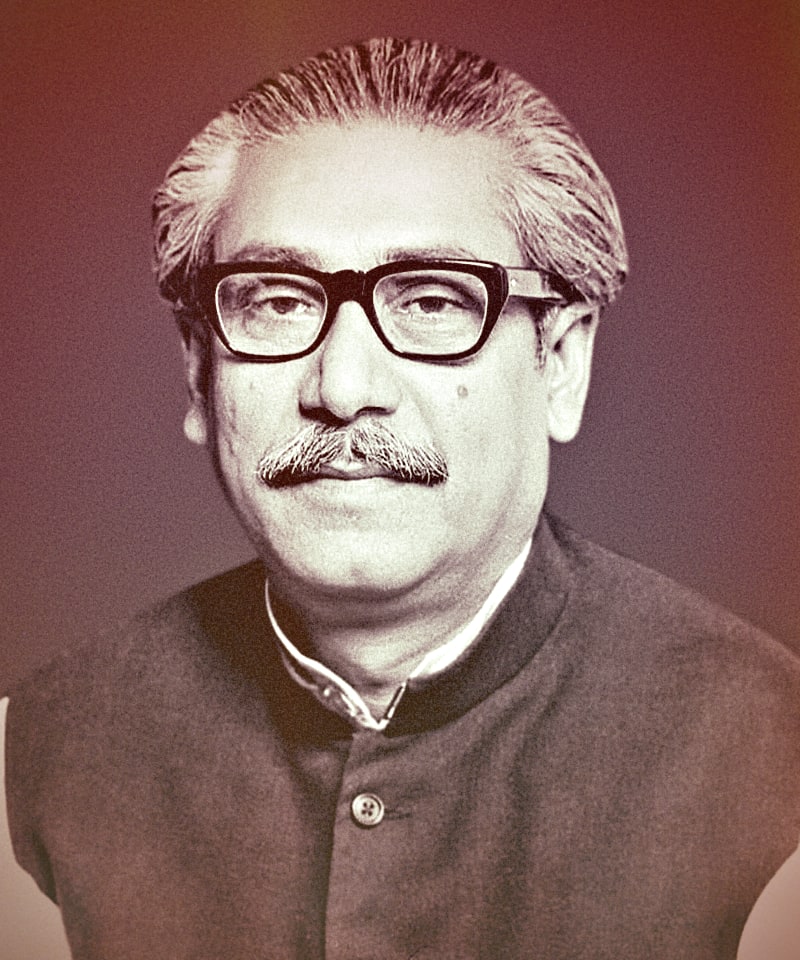
Two questions have followed me since those days. A politician as seasoned as Sheikh Mujibur Rahman watched plane loads of troops and armaments pour in before his eyes. A delegation from Chittagong, led by Captain Amin Ahmed Chowdhury, came to warn him about the military’s plans but was dismissed. Was Mujib so consumed by the prospect of power in Islamabad that he could not see, or refused to see, the generals’ game?
And why did Mujib surrender on March 25 instead of declaring independence and joining the liberation war? On March 7, he had told the nation: এবারের সংগ্রাম স্বাধীনতার সংগ্রাম …আমাদের মুক্তির সংগ্রাম…রক্ত যখন দিয়েছি, আরো রক্ত দিব… (Our struggle this time is for our independence, our freedom. We have given blood, and will give more blood when needed.)
Call for Independence
Thirty hours later, on March 27, an announcement came from the Kalurghat radio station in Chittagong:
“I, Major Ziaur Rahman, hereby declare the independence of the Republic of Bangladesh. As the temporary Head of the Republic, I call upon all Bengalis to rise against the attack by the West Pakistani Army. We shall fight to the last to free our motherland. By the grace of Allah, victory is ours.”
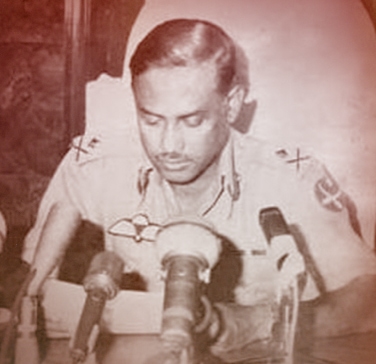
The announcement was later modified to state that it had been given on behalf of Sheikh Mujibur Rahman, the supreme Bengali political leader at the time.
A Japanese merchant ship at the Bay of Bengal picked up the broadcast and relayed it to the outside world. The effect was immediate. The disoriented people of East Pakistan received their direction and started the war of independence.
Before the start of the onslaught, the Pakistani Army had disarmed Bengali elements at their bases in East Pakistan, but many Bengalis in the outlying areas still possessed weapons. They revolted, with or without arms. In some cases, they broke the armouries and seized the weapons.
A Soldier’s Debt
I missed the carnage. I escaped the horror. I was 1,300 miles away in Sialkot, West Pakistan, serving as an army captain. Strict news censorship kept me in the dark. International papers were kept out of reach. Listening to overseas broadcasts that reported on East Pakistan was discouraged. The official explanation: “That information is false and biased.” Being an apolitical person, I accepted that. I even believed the president when he said on March 26 that whatever steps he had taken were necessary to save the nation from disintegration. I did not give much credence to the rumours trickling in, until two months later.
In May, on a visit to a Bengali family in Islamabad, I came across a pack of clippings they had received in secret from a relative overseas. The New York Times, Newsweek, TIME, International Herald Tribune, Telegraph, and The Guardian described in detail the true stories of East Pakistan: the massacre, the rape, the destruction, the barbarity. Not all of these descriptions could be false and biased, I reasoned. And then my emotions imploded, caused by the agony of shattered trust and the curse of misplaced loyalty.
I was no longer at peace with myself. I kept seeing countless dead bodies, endless wailing of sufferers and blank gazes of violated women that posed a million questions to me.
“I am a soldier,” I said to myself. “It is my obligation to respond to their cries. I have a mission to complete. I have a debt to pay to my people: a soldier’s debt.”
Adapted from A Soldier’s Debt, Rashed Chowdhury, 2015, Amazon. Its Bangla version, titled রক্তের ঋণ, was published in Dhaka in 2024.
As an army Captain in 1971, the writer fled from Lahore in a military Jeep, through dangerous deployments and crossed the border to India. He joined the liberation war with the Z Force of Colonel Ziaur Rahman, later becoming a decorated freedom fighter. He lives in retirement, reading, writing and gardening. He writes regularly in the media, mostly on Bangladesh’s contemporary issues. He has authored half a dozen books and co-authored a dozen.